


How to Identify a High-Quality Lab-Grown Diamond: A Complete Buyer’s Guide 2026
Diamonds have long been a symbol of love, luxury, and timeless elegance. With the growing popularity of lab-grown diamonds, more consumers are discovering a smarter, more sustainable way to enjoy the brilliance of diamonds without compromising on quality. However, not all lab-grown diamonds are created equal. Understanding how to identify a high-quality lab-grown diamond can help you make a confident and informed purchase.
In this guide, we’ll explore the key factors that determine the quality of a lab-grown diamond and what you should look for before making your investment.
What Is a Lab-Grown Diamond?
A lab-grown diamond is a real diamond created in a controlled laboratory environment using advanced technology that replicates the natural diamond-growing process. These diamonds possess the same physical, chemical, and optical properties as mined diamonds.
Unlike diamond simulants such as cubic zirconia or moissanite, lab-grown diamonds are genuine diamonds that offer the same sparkle, durability, and beauty as their natural counterparts.
Understanding the 4Cs of Diamond Quality
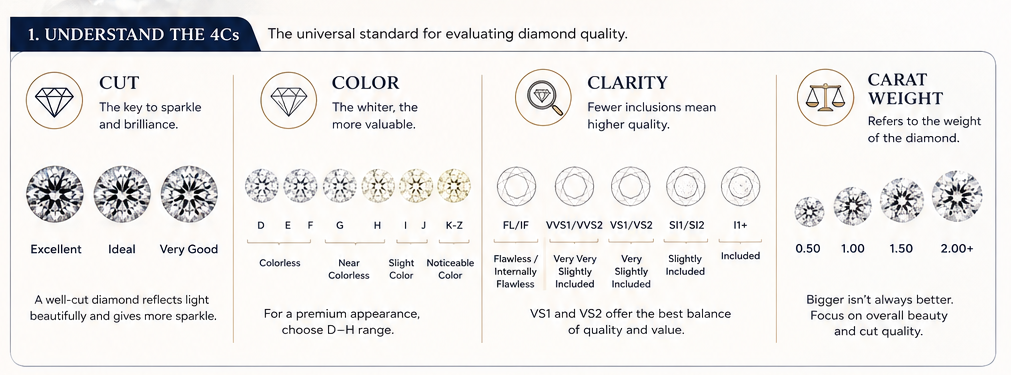
The most important way to evaluate any diamond, whether natural or lab-grown, is through the 4Cs: Cut, Color, Clarity, and Carat Weight.
1. Cut: The Key to Maximum Sparkle
The cut of a diamond significantly impacts its brilliance and fire. A well-cut diamond reflects light efficiently, creating the dazzling sparkle diamonds are known for.
When shopping for a lab-grown diamond, prioritize diamonds with:
- Excellent Cut
- Ideal Cut
- Very Good Cut
A superior cut can make even a smaller diamond appear more brilliant than a larger poorly cut stone.
2. Color: The Whiter, The Better
Diamond color is graded on a scale from D to Z.
- D-F: Colorless (Highest Quality)
- G-H: Near Colorless
- I-J: Slight Color
- K-Z: Noticeable Color
For a premium appearance, most buyers choose diamonds in the D-H range. These diamonds appear bright, white, and luxurious while offering excellent value.
3. Clarity: Looking Beyond Imperfections
Clarity measures the presence of internal inclusions and external blemishes.
Common clarity grades include:
- FL (Flawless)
- IF (Internally Flawless)
- VVS1-VVS2 (Very Very Slightly Included)
- VS1-VS2 (Very Slightly Included)
- SI1-SI2 (Slightly Included)
For the best balance between beauty and affordability, VS1 and VS2 clarity grades are often considered ideal choices.
4. Carat Weight: Size Matters, But Not Alone
Carat refers to the weight of the diamond. While larger diamonds are often more desirable, size should never be the only factor.
A well-cut 1-carat lab-grown diamond can appear more stunning than a larger diamond with poor cut quality.
Focus on overall beauty rather than carat weight alone.
Check for Diamond Certification
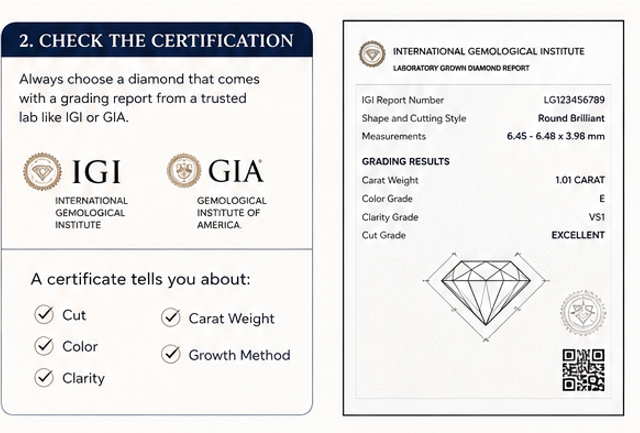
One of the most important steps in identifying a high-quality lab-grown diamond is verifying its certification.
Trusted grading laboratories include:
- IGI (International Gemological Institute)
- GIA (Gemological Institute of America)
A certification report provides unbiased information about the diamond’s:
- Cut
- Color
- Clarity
- Carat Weight
- Growth Method
Never purchase a lab-grown diamond without a recognized grading certificate.
Examine the Diamond’s Brilliance
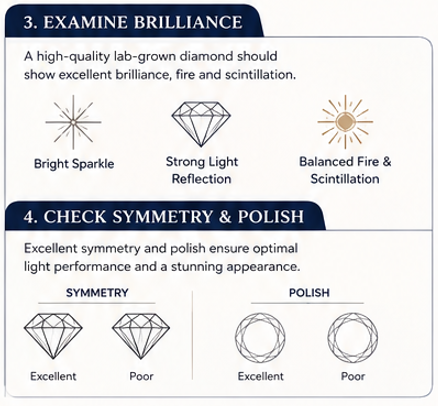
Brilliance refers to the amount of white light reflected by the diamond.
A high-quality lab-grown diamond should display:
- Bright sparkle
- Strong light reflection
- Balanced fire and scintillation
View the diamond under different lighting conditions to assess its true brilliance. Natural daylight often provides the most accurate representation.
Look for Excellent Symmetry and Polish
Two often-overlooked quality indicators are symmetry and polish.
Symmetry
Symmetry measures how precisely the diamond’s facets align.
Polish
Polish refers to the smoothness of the diamond’s surface.
Aim for diamonds graded:
- Excellent
- Very Good
These grades ensure optimal light performance and visual appeal.
Understand the Growth Method
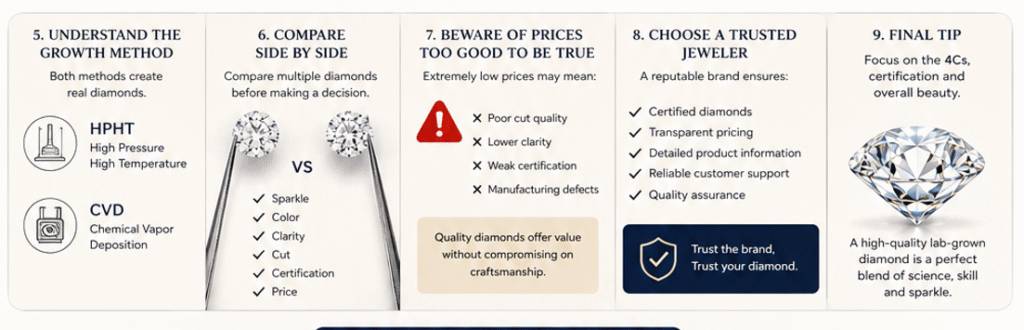
Lab-grown diamonds are primarily created using two methods:
HPHT (High Pressure High Temperature)
This method mimics the natural conditions under which diamonds form deep within the Earth.
CVD (Chemical Vapor Deposition)
This advanced technique grows diamonds layer by layer in a controlled environment.
Both methods can produce exceptional diamonds. The overall quality depends more on the finished diamond’s grading than the growth method itself.
Compare Diamonds Side by Side
One of the best ways to identify quality is through comparison.
When evaluating multiple lab-grown diamonds, compare:
- Sparkle
- Color
- Clarity
- Certification
- Price
Seeing diamonds side by side often makes differences in quality much easier to spot.
Beware of Prices That Seem Too Good to Be True
While lab-grown diamonds are generally more affordable than mined diamonds, extremely low prices can sometimes indicate:
- Poor cut quality
- Lower clarity
- Weak certification
- Manufacturing defects
A quality lab-grown diamond should offer value without sacrificing craftsmanship or beauty.
Choose a Trusted Jewelry Brand
The reputation of the jeweler matters just as much as the diamond itself.
A trusted brand will provide:
- Certified diamonds
- Transparent pricing
- Detailed product information
- Reliable customer support
- Quality assurance
Buying from an established jewelry brand ensures peace of mind and long-term satisfaction.
Final Thoughts
Identifying a high-quality lab-grown diamond doesn’t have to be complicated. By understanding the 4Cs, verifying certification, examining brilliance, and choosing a reputable jeweler, you can confidently select a diamond that delivers exceptional beauty and value.
Lab-grown diamonds represent the future of fine jewelry, offering the same luxury and elegance as mined diamonds while embracing innovation and sustainability. Whether you’re shopping for an engagement ring, a special gift, or a timeless piece for yourself, focusing on quality will ensure your diamond shines brilliantly for years to come.