


Lab-Grown Diamonds vs Natural Diamonds: Which Is Better in 2026?
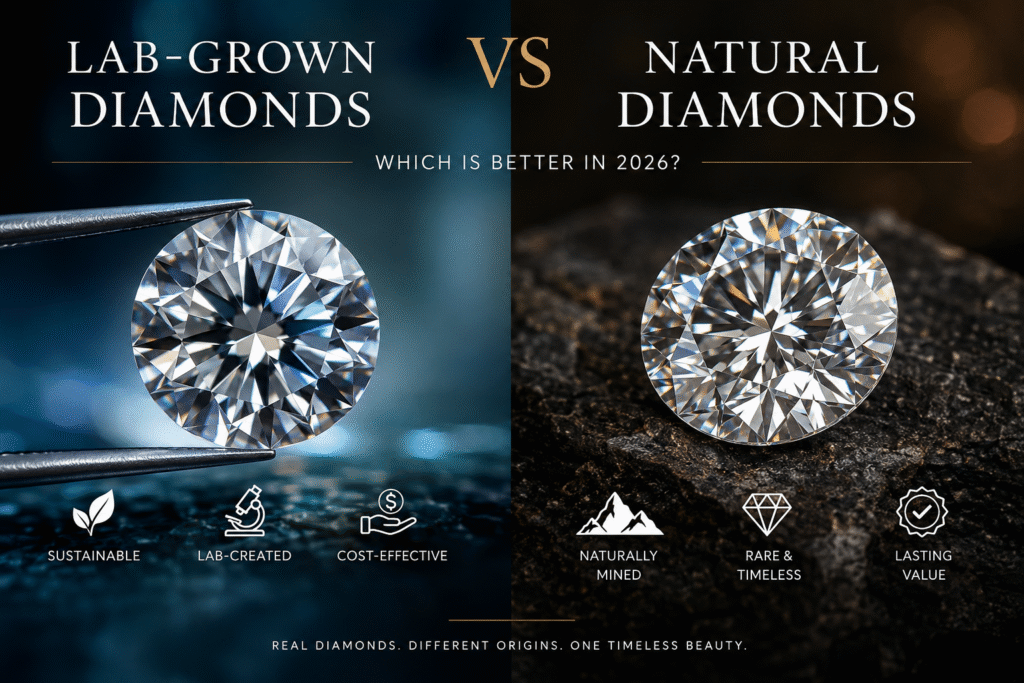
Diamonds have long symbolized love, luxury, and commitment. However, the diamond industry has evolved dramatically in recent years, and 2026 is proving to be a turning point. Lab-grown diamonds are becoming increasingly popular, offering consumers a modern alternative to traditional mined diamonds.
If you’re shopping for an engagement ring, wedding jewelry, or a timeless gift, you may be wondering: Which is better in 2026—lab-grown diamonds or natural diamonds?
Let’s compare them across the factors that matter most to today’s buyers.
What Are Lab-Grown Diamonds?
Lab-grown diamonds are real diamonds created in advanced laboratories using cutting-edge technology. These diamonds possess the same physical, chemical, and optical properties as natural diamonds.
Unlike diamond simulants such as cubic zirconia or moissanite, lab-grown diamonds are genuine diamonds. Even professional jewelers often require specialized equipment to distinguish them from mined diamonds.
What Are Natural Diamonds?
Natural diamonds are formed deep beneath the Earth’s surface over billions of years through intense heat and pressure. They are extracted through mining operations and then cut, polished, and prepared for jewelry.
Their rarity and natural origin have traditionally made them highly desirable and valuable.
Appearance and Quality
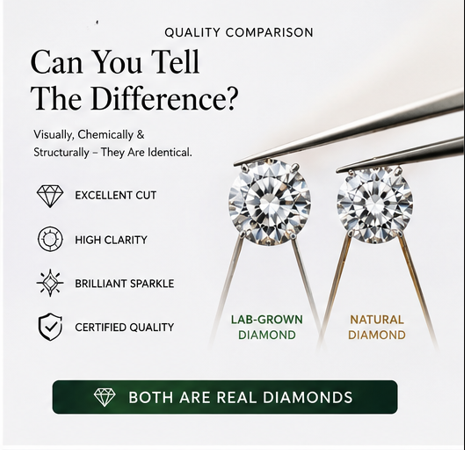
One of the biggest misconceptions is that lab-grown diamonds look different from natural diamonds.
The truth is simple: they don’t.
Both types of diamonds can achieve exceptional grades in:
- Cut
- Color
- Clarity
- Carat Weight
When placed side by side, it is virtually impossible to tell the difference without specialized testing equipment.
Winner: Tie
Both options offer stunning brilliance and beauty.
Price Comparison in 2026
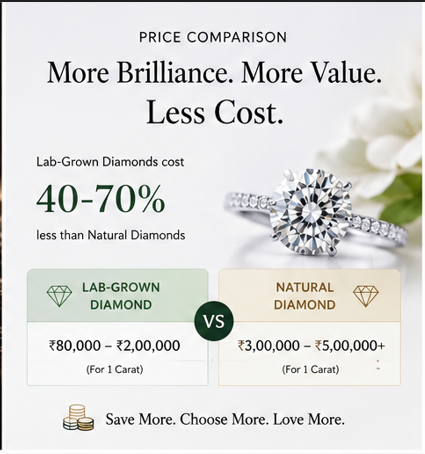
Price remains one of the biggest reasons consumers are choosing lab-grown diamonds.
Lab-grown diamonds typically cost 40% to 70% less than natural diamonds of similar quality.
For example:
- Natural 1-carat diamond: ₹3,00,000–₹5,00,000+
- Lab-grown 1-carat diamond: ₹80,000–₹2,00,000
This price difference allows buyers to choose larger stones or higher-quality diamonds while staying within budget.
Winner: Lab-Grown Diamonds
They deliver exceptional value for money.
Sustainability and Environmental Impact
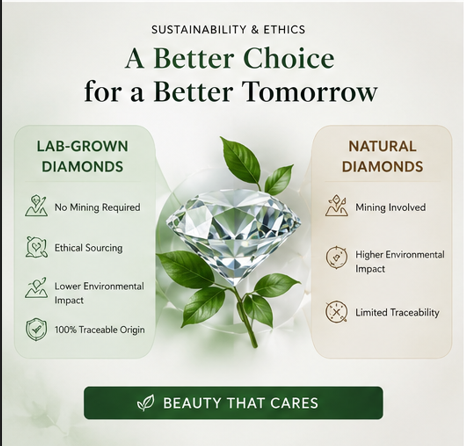
Environmental consciousness is influencing purchasing decisions more than ever in 2026.
Traditional diamond mining can involve:
- Land disruption
- High energy consumption
- Water usage
- Carbon emissions
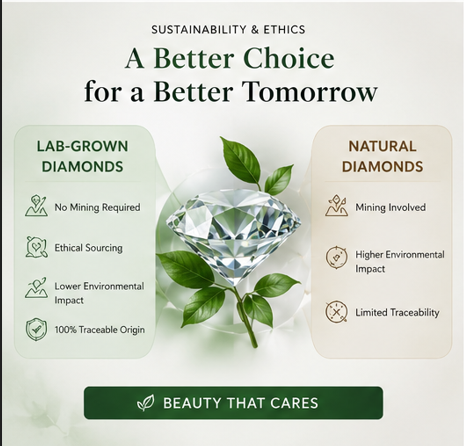
Lab-grown diamonds eliminate the need for mining and generally have a lower environmental footprint, especially when produced using renewable energy sources.
Many younger consumers prefer lab-grown diamonds because they align with sustainable and ethical values.
Winner: Lab-Grown Diamonds
A more environmentally responsible choice.
Ethical Considerations
Consumers today want transparency regarding the origin of their jewelry.
While the natural diamond industry has made significant improvements in ethical sourcing, concerns about mining practices still exist in some regions.
Lab-grown diamonds offer a fully traceable supply chain and eliminate concerns related to conflict diamonds.
Winner: Lab-Grown Diamonds
Greater transparency and peace of mind.
Rarity and Emotional Value
Natural diamonds possess a unique story. Formed billions of years ago beneath the Earth, they carry a sense of rarity that many buyers find meaningful.
Some people value the idea of owning something created naturally over millions or billions of years.
Lab-grown diamonds, while equally beautiful, do not have the same geological history.
Winner: Natural Diamonds
For those who prioritize rarity and tradition.
Resale and Long-Term Value
When discussing resale value, natural diamonds generally perform better than lab-grown diamonds.
Natural diamonds have an established secondary market and retain value more effectively over time.
Lab-grown diamonds continue to become more affordable as production technology improves, which may impact future resale prices.
However, many modern buyers prioritize enjoying their jewelry rather than viewing it as an investment.
Winner: Natural Diamonds
Better resale potential and long-term market recognition.
What Modern Couples Are Choosing in 2026
A growing number of millennials and Gen Z buyers are choosing lab-grown diamonds for engagement rings.
The reasons include:
- Better value
- Larger diamond sizes
- Ethical sourcing
- Sustainability
- Modern luxury appeal
The shift reflects changing consumer priorities where smart spending and responsible purchasing are becoming more important than tradition alone.
Who Should Choose a Lab-Grown Diamond?
A lab-grown diamond may be perfect for you if:
- You want maximum value for your budget.
- Sustainability matters to you.
- You prefer ethical sourcing.
- You want a larger diamond for the same price.
- You prioritize beauty over rarity.
Who Should Choose a Natural Diamond?
A natural diamond may be ideal if:
- You appreciate geological rarity.
- Tradition is important to you.
- You value long-term resale potential.
- You want a diamond with a unique natural history.
Final Verdict: Which Is Better in 2026?
The answer depends on what matters most to you.
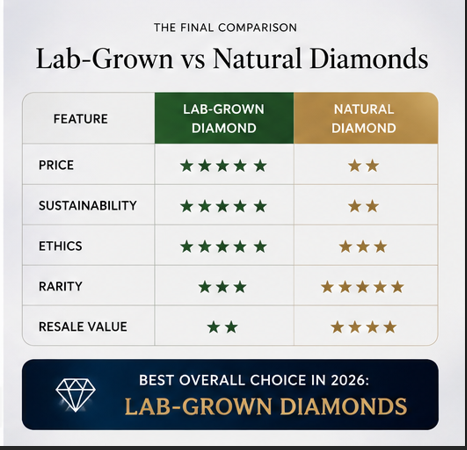
If you’re looking for exceptional beauty, outstanding value, sustainability, and ethical sourcing, lab-grown diamonds are the clear winner in 2026.
If rarity, tradition, and long-term resale value are your top priorities, a natural diamond may still be the better choice.
For most modern consumers, however, lab-grown diamonds represent the future of luxury—offering the same brilliance and quality as natural diamonds while being more affordable and environmentally conscious.
As the jewelry industry continues to evolve, lab-grown diamonds are no longer an alternative. In 2026, they have become a preferred choice for smart, modern buyers seeking luxury without compromise.